
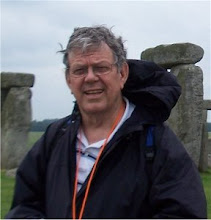


Yesterday (Saturday, August 18) I returned to San Antonio from a trip to Saddleback Church in Lake Forest, California. A group of eight from our church attended the Celebrate Recovery (CR) national Summit 2007. Over 3,500 persons were there.
We are in our third year of CR at our church. It is a 12-step program designed to serve folks with all sorts of hurts, habits and hangups. Sure, CR deals with addictions to alcohol and drugs; but, it is so much more than that. Any kind of hurt a person might be carrying inside, any kind of destructive habit, any relationship-destroying hangup is fair game.
During this Summit, I became aware of a new area that needs to be addressed in our churches: sexual immorality. I attended a group of over 200 men who admitted to be struggling with sexual addictions---things like lust, pornography, sexual infidelty, adultery, etc. I heard confessions of how sexual obsessions had been extremely destructive to lives, marriages, jobs and careers.
I also heard men say they have been "sober" or "clean" from impurities for days, months, even years. I heard men proclaiming a hunger for holiness. Men whose lives had been restored.
I was directed to a book: Every Man's Battle by Steven Arterburn, Ph.D. He is a psychologist whose book has been used as a study guide for those seeking freedom from sexual obsessions.
A study will be proposed to our Adult Ministries and Council on Ministry. Hopefully a study called "Sexual Integrity" can be offered through our church. And, after the eight-week course, a "maintenance share group", and 12-step program hopefully will be started at Celebrate Recovery.
We live in an age where sexually-stimulating imagery and language is presented to us many times a day: in entertainment media, print media, advertisements, in daily conversations, in our choices of clothing. Pornography, in whatever form it is presented tends to restrict the dimensions of our relationships. We as a people have a real need to learn to control and appropriately use the sexual aspects of our life.
I am aware that Celebrate Recovery, and much of the sexual integrity literature that is out there may take a reactionary, rigid, puritanical position on sex. I don't belong in that camp. But, I do believe that sexual addiction (especially lust, pornogoraphy and adultery) can be very destructive to the most precious relationships we share.
As I learn more, I will write more.
Sunday, August 19, 2007
Wednesday, July 25, 2007
We (Pridefully) Are Number One!
.
This fall at some football game it is inevitable you will see zealous students waving their index finger in the air and proclaiming "We're Number One" over and over. And it will be just as certain that they are not. They may have a good won- loss record, perhaps 7-3, but more than likely they will be second or third in their conference, certainly not number one in the nation.
Rampant, exuberant pride will blind the student body to its losses and propel their unfounded claim. We understand all this and take it with a grain of salt. Kids love their school, want to think of it as great, and, allow some of the "greatness" to filter down on themselves.
But it is harder to understand when adults make such a claim for themselves, when the evidence so clearly points elsewhere.
Witness: Pope Benedict XVI a couple of weeks ago declared that the Roman Catholic Church (RCC) was the only true church.
.
Other churches havc elements of holiness, the Pope said, but are defective.
Oh my, oh my! This pronouncement, echoing such claims of a bygone day, came during the very same week when the Los Angeles diocese of the RCC announced it was going to pay $660 million to persons who claimed to be sexual abuse victims of church priests.
Add to that the millions and millions other archbishops have coughed over to those offended by their priests and you have a "defect" larger that a billion dollars, and -- even worse -- thousands and thousands of lives blighted. The only true church? We're number one indeed!
Weekly a small group of men meet in our church. Recently one person noted that pride was one of the deadly sins. Quite a discussion ensued, with such statements as "I'm proud to be an American." and "I take pride in my work." And those meanings of "pride" do abound in our popular usage.
But pride's first meaning in your dictionary (look it up) is "overhigh opinion of oneself, exaggerated self-esteem and conceit". It is this kind of "blowing oneself up" that leads us humans to think we are better than everyone else.
When I was growing up in West Texas there was a church there which claimed it was the only true church. All other churches (including the RCC) were false churches because they had practices which were not found in the New Testament (e.g., using pianos in worship, calling their building a "church", naming their churches after saints, etc.).
Many other churches or religious bodies have asserted their exclusive righteousness, their special standing before God. Ever hear the phrase "chosen race" or "chosen people"? In the Christian church we struggle with the early church's quote of Jesus: "No one comes to the Father except through me." And the Islamic and Jewish faiths have adherents who make a similar claim, "we are the only way to salvation".
It is a childish arrogance to proclaim oneself or one's group as the one group or people on all the earth whom God loves more than others.
Years ago I worked as a caseworker on a psychiatric unit at a state hospital. It was not unusual for us to admit persons with many different delusions. E.g., unwed mothers often claimed to be the virgin Mary. Once we had two different patients, both claiming to be Jesus Christ. Even to them it was obvious that there could not be two of them. When confronted with that contradiction, one of them replied, "Well, I am the real Jesus, he is a fake." And, of course the other patient said the same thing.
Whenever we are led to claim that we are special, while others are ordindary, chances are our claim is based on prideful delusion.
Why do we do this? Do we not all want to be special? Do we not all want to be important? In the Christian Scripture the mother of James and John wanted to insure a seat of importance for her sons in heaven. As disciples of Jesus, they were already important to Jesus, but their mother wanted them to sit in places of honor (Matthew 20.21). She wanted her sons to be number one (and number two, I suppose).
The antidote to this kind of thinking is humility---the opposite of pride. I have often wondered about the relationship between the word "humility" and "humus". The latter is a rich and fertile dirt, but still, only dirt. And, in the Jewish story of creation, God made man out of dirt. To me this suggests that our true satisfaction in life is rooted in the knowledge that we come from "dirt" and to "dirt" we will return.
In a "first-shall-be-last" kingdom, claiming we are number one almost certainly assures that we are not.
This fall at some football game it is inevitable you will see zealous students waving their index finger in the air and proclaiming "We're Number One" over and over. And it will be just as certain that they are not. They may have a good won-
 loss record, perhaps 7-3, but more than likely they will be second or third in their conference, certainly not number one in the nation.
Rampant, exuberant pride will blind the student body to its losses and propel their unfounded claim. We understand all this and take it with a grain of salt. Kids love their school, want to think of it as great, and, allow some of the "greatness" to filter down on themselves.
But it is harder to understand when adults make such a claim for themselves, when the evidence so clearly points elsewhere.
Witness: Pope Benedict XVI a couple of weeks ago declared that the Roman Catholic Church (RCC) was the only true church.
.

Other churches havc elements of holiness, the Pope said, but are defective.
Oh my, oh my! This pronouncement, echoing such claims of a bygone day, came during the very same week when the Los Angeles diocese of the RCC announced it was going to pay $660 million to persons who claimed to be sexual abuse victims of church priests.
Add to that the millions and millions other archbishops have coughed over to those offended by their priests and you have a "defect" larger that a billion dollars, and -- even worse -- thousands and thousands of lives blighted. The only true church? We're number one indeed!
Weekly a small group of men meet in our church. Recently one person noted that pride was one of the deadly sins. Quite a discussion ensued, with such statements as "I'm proud to be an American." and "I take pride in my work." And those meanings of "pride" do abound in our popular usage.
But pride's first meaning in your dictionary (look it up) is "overhigh opinion of oneself, exaggerated self-esteem and conceit". It is this kind of "blowing oneself up" that leads us humans to think we are better than everyone else.
When I was growing up in West Texas there was a church there which claimed it was the only true church. All other churches (including the RCC) were false churches because they had practices which were not found in the New Testament (e.g., using pianos in worship, calling their building a "church", naming their churches after saints, etc.).
Many other churches or religious bodies have asserted their exclusive righteousness, their special standing before God. Ever hear the phrase "chosen race" or "chosen people"? In the Christian church we struggle with the early church's quote of Jesus: "No one comes to the Father except through me." And the Islamic and Jewish faiths have adherents who make a similar claim, "we are the only way to salvation".
It is a childish arrogance to proclaim oneself or one's group as the one group or people on all the earth whom God loves more than others.
Years ago I worked as a caseworker on a psychiatric unit at a state hospital. It was not unusual for us to admit persons with many different delusions. E.g., unwed mothers often claimed to be the virgin Mary. Once we had two different patients, both claiming to be Jesus Christ. Even to them it was obvious that there could not be two of them. When confronted with that contradiction, one of them replied, "Well, I am the real Jesus, he is a fake." And, of course the other patient said the same thing.
Whenever we are led to claim that we are special, while others are ordindary, chances are our claim is based on prideful delusion.
Why do we do this? Do we not all want to be special? Do we not all want to be important? In the Christian Scripture the mother of James and John wanted to insure a seat of importance for her sons in heaven. As disciples of Jesus, they were already important to Jesus, but their mother wanted them to sit in places of honor (Matthew 20.21). She wanted her sons to be number one (and number two, I suppose).
The antidote to this kind of thinking is humility---the opposite of pride. I have often wondered about the relationship between the word "humility" and "humus". The latter is a rich and fertile dirt, but still, only dirt. And, in the Jewish story of creation, God made man out of dirt. To me this suggests that our true satisfaction in life is rooted in the knowledge that we come from "dirt" and to "dirt" we will return.
In a "first-shall-be-last" kingdom, claiming we are number one almost certainly assures that we are not.


Wednesday, July 4, 2007
Save Me from the Gripers
I know a religious lady who claims to be a Christian who publisihes a gripe about every five minutes of her waking moments. Mostly she gripes about the people around her; and, I am convinced she must gripe about me once I am out of her sight.
We have a lot of "cultural Christians", many, many such, who religiously perform "Christian" rites (associated with the church) but whose life can hardly be distinguished from a non-Christian when they are away from church functions. They even gripe about the preacher, the selected hymns, the choir, the ushers, the temperature in the sanctuary, the other people who come to functions. And, they fail to see the selfish toxin they spread and multiply in themselves. It is difficult to be around them for long.
~ ~ ~ ~ ~ ~ ~ ~ ~ ~
A story is told about a man who wanted to be a monk in a monastery, so he took the vows and began his novitiate.
"For the first year, you must work daily in the garden, and keep silent."
So he did his daily work without a word. At the end of that time, the Abbot said he could speak two words.
"Hard Bed", said the novice.
He was chastised and told he had to work another year in silence. At the end of that time, he once again was give the opportunity to say two words.
"Bad Food", he replied.
This time he was told he must work two years in silence, in the garden, the kitchen and mopping floors. At the end of that time he was brought before the Abbot again and given two words.
"I quit.", he spoke.
"Well, it's just as well," said the Abbot. "You have done nothing but gripe ever since you have been here.
~ ~ ~ ~ ~ ~ ~ ~ ~ ~
I think griping is a very aggressive way, a very negative aggressive way of walking through life. It is possible the griper is not consciously aware of their constant harangue. A griper may be like the preacher who says, "Dear God," fifteen times when he utters a pastoral prayer. [That's the religious version of the secular person who says, "you know" over and over in conversation.] The griper probably does not know how bitter and negative they sound. And they may not even be aware of their words.
But others are. And others are aware that the griper makes a choice not to be thankful for life. The griper plays out his/her life from a cess pool of daily pain and rotting relationships. He does not trust the rule of thanksgiving. Nor is the call to "come into the presence of the Lord with thanksgiving" answered in their life.
David Scholer is a very popular New Testament professor at Fuller Theological Seminary. He was diagnosed with colorectal cancer five years ago. It has now spread to both lungs, and he has asthma, diabetes and arthritis. Students say that his most important lesson is the importance of living with ambiguity; and, to ponder Paul's 1st Thessalonians statement, "Rejoice always, pray continually, give thanks in all circumstances."
When you give thanks to God for all things in your life, daily, one-by-one, the good things and the bad things, it absolutely transforms your life. You become a joy and a blessing to those you meet.
We have a lot of "cultural Christians", many, many such, who religiously perform "Christian" rites (associated with the church) but whose life can hardly be distinguished from a non-Christian when they are away from church functions. They even gripe about the preacher, the selected hymns, the choir, the ushers, the temperature in the sanctuary, the other people who come to functions. And, they fail to see the selfish toxin they spread and multiply in themselves. It is difficult to be around them for long.
~ ~ ~ ~ ~ ~ ~ ~ ~ ~
A story is told about a man who wanted to be a monk in a monastery, so he took the vows and began his novitiate.
"For the first year, you must work daily in the garden, and keep silent."
So he did his daily work without a word. At the end of that time, the Abbot said he could speak two words.
"Hard Bed", said the novice.
He was chastised and told he had to work another year in silence. At the end of that time, he once again was give the opportunity to say two words.
"Bad Food", he replied.
This time he was told he must work two years in silence, in the garden, the kitchen and mopping floors. At the end of that time he was brought before the Abbot again and given two words.
"I quit.", he spoke.
"Well, it's just as well," said the Abbot. "You have done nothing but gripe ever since you have been here.
~ ~ ~ ~ ~ ~ ~ ~ ~ ~
I think griping is a very aggressive way, a very negative aggressive way of walking through life. It is possible the griper is not consciously aware of their constant harangue. A griper may be like the preacher who says, "Dear God," fifteen times when he utters a pastoral prayer. [That's the religious version of the secular person who says, "you know" over and over in conversation.] The griper probably does not know how bitter and negative they sound. And they may not even be aware of their words.
But others are. And others are aware that the griper makes a choice not to be thankful for life. The griper plays out his/her life from a cess pool of daily pain and rotting relationships. He does not trust the rule of thanksgiving. Nor is the call to "come into the presence of the Lord with thanksgiving" answered in their life.
David Scholer is a very popular New Testament professor at Fuller Theological Seminary. He was diagnosed with colorectal cancer five years ago. It has now spread to both lungs, and he has asthma, diabetes and arthritis. Students say that his most important lesson is the importance of living with ambiguity; and, to ponder Paul's 1st Thessalonians statement, "Rejoice always, pray continually, give thanks in all circumstances."
When you give thanks to God for all things in your life, daily, one-by-one, the good things and the bad things, it absolutely transforms your life. You become a joy and a blessing to those you meet.
Saturday, June 30, 2007
Second Life: A Virtual World of Wonder
For the past week I have been exploring Second Life, an internet based world which provides a wide-range of "imaginary/real" experiences. In this "world" I have adopted the name of Hosea Beaumont, and am aspiring to be a Protestant Benedictine Monk, living at the Felix Meritas monastery in the Lill Burn Valley.
Reportedly over seven million persons are members of this cyber world; however only around 30-40,000 seem to be signed on at any one time. The cost is not too high if you are frugal. I bought L$1,000 (Linden dollars--"play" money named after the founders of Second Life, the Lindens) for $4.02 and have spent around 400 so far. Two hundred for a week's rent of a cell in the Cloister at the monastery and other expenses along the way (L$95 for a Benedictine robe).
Each person has an avatar (a representative humanoid, well some do not look like a human) which you get to design yourself with some fairly sophisticated tools. and you can make or buy clothing.
I must admit there are an unusual number of sexy women running around, since there are generous limits as the the size of various body parts you can choose. And much of the clothing is probably what most earth-based creatures wish they could wear (on bodies they wish were really theirs).
So you have to put up with sex and gambling as two primary modes of behavior; however, there is plenty of room to discuss redemption and forgiveness in this world.
Yesterday I discussed God and agnosticism with a young psychological student from Toulouse, France (yes he really was from France---this thing is a world-wide community). Today I debated with a Greek Orthodox follower who was proclaiming his church was right and all others were wrong. I have an acquaintance with a sister here at the monastery who in RL (real life) is a medical student in Munich. I talked with a fellow from Spain and a lady from California yesterday.
Most of the time I just sit in the courtyard and welcome folks who "drop in" to visit the monastery. Some come intending to discuss religious matters. Other times I "transport" to other locations, shopping malls, churches, parks, a recreational midnight walk, even a casino, w here I won L$60 on my third try and immediately quit. Today I took an hour class on how to write behavioral scripts for my avatar.
I hope to build a United Methodist Church (tho I probably won't call it that), preach on Sundays, teach some classes, have a Bible Study or two, counsel whenever, and develop a circuit like Wesley. Small groups are next, on different levels of discourse and accountability. It takes time to develop a group I suspect, but it will really be fun and worthwhile.
So, if you wish to come and see what this is all about, click on this address: http://www.secondlife.com/ and come aboard. If you spend any time there, come on over to the Felix Meritas monastery and say high. I usually spend a little time there in the late afternoons and evenings (beats TV). Oh yes, if you decide to become a Premium Member, somehow I will get L$2,000 as a reward if you mention my name Whatever I get will go toward building a church.
[Late news: in the Sunday, July 1, edition of the San Antonio Express-News there is a story on Virtual Worlds. See it at:
http://www.mysanantonio.com/business/stories/MYSA070107.1R.VirtualWorlds.2a76c32.html
]
Blessings,
Hosea Beaumont,
aka Conrad
UPDATE: ABOUT THREE WEEKS AGO (EARLY OCTOBER) I BURIED MY AVATAR OUTSIDE THE FELIX MERITAS MONASTERY WALLS (DID'NT KNOW WHAT ELSE TO DO WITH HIM.) I LEFT SECOND LIFE IN FAVOR OF FIRST LIFE. I FOUND NOT MUCH TO DO THERE EXCEPT TALK, DONATE MONEY TO SOMEONE ELSE AND RIDE A TOY TRAIN. CAN DO THAT BETTER IN FIRST LIFE. ADIEU.
Reportedly over seven million persons are members of this cyber world; however only around 30-40,000 seem to be signed on at any one time. The cost is not too high if you are frugal. I bought L$1,000 (Linden dollars--"play" money named after the founders of Second Life, the Lindens) for $4.02 and have spent around 400 so far. Two hundred for a week's rent of a cell in the Cloister at the monastery and other expenses along the way (L$95 for a Benedictine robe).
Each person has an avatar (a representative humanoid, well some do not look like a human) which you get to design yourself with some fairly sophisticated tools. and you can make or buy clothing.
I must admit there are an unusual number of sexy women running around, since there are generous limits as the the size of various body parts you can choose. And much of the clothing is probably what most earth-based creatures wish they could wear (on bodies they wish were really theirs).
So you have to put up with sex and gambling as two primary modes of behavior; however, there is plenty of room to discuss redemption and forgiveness in this world.
Yesterday I discussed God and agnosticism with a young psychological student from Toulouse, France (yes he really was from France---this thing is a world-wide community). Today I debated with a Greek Orthodox follower who was proclaiming his church was right and all others were wrong. I have an acquaintance with a sister here at the monastery who in RL (real life) is a medical student in Munich. I talked with a fellow from Spain and a lady from California yesterday.
Most of the time I just sit in the courtyard and welcome folks who "drop in" to visit the monastery. Some come intending to discuss religious matters. Other times I "transport" to other locations, shopping malls, churches, parks, a recreational midnight walk, even a casino, w here I won L$60 on my third try and immediately quit. Today I took an hour class on how to write behavioral scripts for my avatar.
I hope to build a United Methodist Church (tho I probably won't call it that), preach on Sundays, teach some classes, have a Bible Study or two, counsel whenever, and develop a circuit like Wesley. Small groups are next, on different levels of discourse and accountability. It takes time to develop a group I suspect, but it will really be fun and worthwhile.
So, if you wish to come and see what this is all about, click on this address: http://www.secondlife.com/ and come aboard. If you spend any time there, come on over to the Felix Meritas monastery and say high. I usually spend a little time there in the late afternoons and evenings (beats TV). Oh yes, if you decide to become a Premium Member, somehow I will get L$2,000 as a reward if you mention my name Whatever I get will go toward building a church.
[Late news: in the Sunday, July 1, edition of the San Antonio Express-News there is a story on Virtual Worlds. See it at:
http://www.mysanantonio.com/business/stories/MYSA070107.1R.VirtualWorlds.2a76c32.html
]
Blessings,
Hosea Beaumont,
aka Conrad
UPDATE: ABOUT THREE WEEKS AGO (EARLY OCTOBER) I BURIED MY AVATAR OUTSIDE THE FELIX MERITAS MONASTERY WALLS (DID'NT KNOW WHAT ELSE TO DO WITH HIM.) I LEFT SECOND LIFE IN FAVOR OF FIRST LIFE. I FOUND NOT MUCH TO DO THERE EXCEPT TALK, DONATE MONEY TO SOMEONE ELSE AND RIDE A TOY TRAIN. CAN DO THAT BETTER IN FIRST LIFE. ADIEU.
Saturday, June 16, 2007
Note to a New Reader
.
PLEASE READ THIS NOTE BEFORE OTHERS.
One of the most difficult things for some Christians to do is to accept the proposition that two different persons can have different understandings of the Christian journey and yet can both be right, or righteous.
RELATIVE TRUTH
God's truth, while absolute for God, is relative to each of us.
Consider for a moment that God has alwasy related to different people differently. From Adam and Eve to Abraham and Sarah, from Moses and Zippporah to David and Bathsheba, and on and on in the biblical story. God reveals himself differently at different times in different ways. It would be futile for Moses to try to convince David that a "burning bush" was the primary way God communicates.
Consider a lighthouse in the middle of the Atlantic Ocean. A ship (e.g. ship # 4 below) sends out a distress call. It is lost and needs direction to the safety of the lighthouse.
PLEASE READ THIS NOTE BEFORE OTHERS.
One of the most difficult things for some Christians to do is to accept the proposition that two different persons can have different understandings of the Christian journey and yet can both be right, or righteous.
RELATIVE TRUTH
God's truth, while absolute for God, is relative to each of us.
Consider for a moment that God has alwasy related to different people differently. From Adam and Eve to Abraham and Sarah, from Moses and Zippporah to David and Bathsheba, and on and on in the biblical story. God reveals himself differently at different times in different ways. It would be futile for Moses to try to convince David that a "burning bush" was the primary way God communicates.
Consider a lighthouse in the middle of the Atlantic Ocean. A ship (e.g. ship # 4 below) sends out a distress call. It is lost and needs direction to the safety of the lighthouse.

Suppose the other ships, in an effort to help, signalled ship #4 to take their direction to safety. Ship #1 would say, "Go Southeast". Ship #2, "Go Northeast". Ship #3, "Go Southwest".
Ship#4 would be hopelessly lost if it tried to go in the same direction as another ship. The moral: Each person must follow their unique pathway to a full transforming relationship with God. To imitate what others advise (no matter how "right" they are) will not bring safety or lasting satisfaction.
PARTIAL UNDERSTANDING
Scripture tells us: Now we see things imperfectly as in a poor mirror, but then we will see everything with perfect clarity. All that I know now is partial and incomplete, but then I will know everything completely, just as God knows me now. 1 Cor 13.12
Some persons have a need to have an absolute authority in their life. This is especially true when we are younger, or when we live in a universe filled with confusion, ambiguity and fear and we are not coping very well. There is a tendency to "whittle God down to size", or to imagine that he exists only to meet our particular needs.
A person getting ready to travel by car across the desert needs to notice that their gas tank is only 1/4 full and be responsible for it. To run out of gas some 100 miles into the journey and then ask God for more gas is totally irresponsible behavior. God does not exist just to bail us out of quandries of our own making.
When we have a "whittled down God" we have falsely expanded our partial knowledge of him to a "complete understanding". We think our understanding of God is the same as his mysterious reality. This process leads to idolatry. We worship our partial understanding as if it were the same as the unlimited, all-powerful, mysterious God.
Anytime we take the infinite and make if finite, that is idolatry.
A Sufi parable tells the story of how different blind persons examined an elephant and tried to come up with a description. One, holding onto the trunk, said, "It seems to be like a large snake." Another, stretching his arms around one of the elephant's legs said, "It appears to be like a large tree." The one with the tail in his hands described it as a "whip".
While the person holding its ears, argued for large thick leaves on a tree. All of the ones involved were "right" in their partial understanding of the elephant, but only by putting all their impressions togeother could they come to a fuller understanding of "elephant".
The moral: Each of bring to the table our own "partial" understanding of God. Respectful dialogue can yield deeper and more complete understanding for all. But, when we refuse to be open-minded to other's witness, we build an impenetrable wall around our own self-authenticated god.
PROGRESSIVE/EVANGELICAL THEOLOGY
In seminary and through my reading these last thirty years, I have learned many things which have changed my Christian stance. There are things I know now, which prohibit me from "believing" some things I once believed. But on the other hand, there are things I have retained from my early Sunday School upbringing which help form the core of my Christian experience.
I would never expect you to put on my perspective for that would be a synthetic coat of faith for you. Neither am I willing to wear your "coat of faith" for that would not be viable for me. But that does not mean that your current faith stance is invalid or wrong. On the contrary, what you currently believe, live and the way you relate to God reflect your interaction with the faith community and with God up to this point in your life. It is vital that you affirm it, while at the same time, stay in dialogue with others in the broader community of faith.
Where your understanding has rough edges, explore and grow. Where it is satisfying and supporting, deepen it and be thankful. One persons faith position is not better than another's, so long as they are both involved in a transforming relationship with God and are engaged in dialogue with the larger Christian community.
RESPECT.
Finally, let us love one another. Let us not be threatened by differences. Let us not feel compelled to force everyone to believe the way we do. In love, let us search for the truth of life, and let us be thankful in all we do.
Thursday, June 14, 2007
News Traces
.
Baptists urge defeat of hate-crimes bill
The Southern Baptist Convention (SBC), meeting in San Antonio (June 13) passed a resolution asking the "Senate and President Bush to prevent hate-crimes from being prosecutable, saying it would add an extra layer of protection for homosexuality, which they say the Bible denounces". The convention urged President Bush to veto the bill if it passes legislative muster.
The reasoning behind this position is that Baptists have been arrested for "inciting hatred" when openly displaying Bible verses pertaining to homosexuality.
The convention of 8,600 messengers (the smallest annual meeting in thirty years) also applauded a message from President Bush, via satellite, in which he praised the charitable work of the Baptists.
The official stance of the SBC on same-sex relations is that "the Bible teaches that homosexuality is a sin" but that all Americans "are urged to treat all gays and lesbians with civility and compassion while sharing the Gospel with them". From the San Antonio Express-News, June 14, 2007
~ ~ ~ ~ ~
From the San Antonio Express-News, June 2, 2007:
----------
A $27 million Creation Museum has opened in Petersburg, Kentucky, promoting a literal Biblical view of creation. The museum claims the earth is only 6,000 years old, that dinosours lived alongside humans, and that the universe was created in six, 24-hour days. Adam and Eve are depicted as white caucasian creatures with their nudity hidden behind a large boulder.
----------
A United Methodist bishop has appointed Drew Phoenix to a pastorate in Maryland. Last year the same pastor was appointed to the same charge under the name of Ann Gordan. Clergy in Baltimore have appealed to the denomination's Judicial Council regarding the transgendered appointment.
----------
Rural Church Struggle. About 52 percent of American churches are in rural areas. That figure repersents around 177,000 congregations. Average attendance is estimated to be twenty.
Baptists urge defeat of hate-crimes bill
The Southern Baptist Convention (SBC), meeting in San Antonio (June 13) passed a resolution asking the "Senate and President Bush to prevent hate-crimes from being prosecutable, saying it would add an extra layer of protection for homosexuality, which they say the Bible denounces". The convention urged President Bush to veto the bill if it passes legislative muster.
The reasoning behind this position is that Baptists have been arrested for "inciting hatred" when openly displaying Bible verses pertaining to homosexuality.
The convention of 8,600 messengers (the smallest annual meeting in thirty years) also applauded a message from President Bush, via satellite, in which he praised the charitable work of the Baptists.
The official stance of the SBC on same-sex relations is that "the Bible teaches that homosexuality is a sin" but that all Americans "are urged to treat all gays and lesbians with civility and compassion while sharing the Gospel with them". From the San Antonio Express-News, June 14, 2007
~ ~ ~ ~ ~
From the San Antonio Express-News, June 2, 2007:
----------
A $27 million Creation Museum has opened in Petersburg, Kentucky, promoting a literal Biblical view of creation. The museum claims the earth is only 6,000 years old, that dinosours lived alongside humans, and that the universe was created in six, 24-hour days. Adam and Eve are depicted as white caucasian creatures with their nudity hidden behind a large boulder.
----------
A United Methodist bishop has appointed Drew Phoenix to a pastorate in Maryland. Last year the same pastor was appointed to the same charge under the name of Ann Gordan. Clergy in Baltimore have appealed to the denomination's Judicial Council regarding the transgendered appointment.
----------
Rural Church Struggle. About 52 percent of American churches are in rural areas. That figure repersents around 177,000 congregations. Average attendance is estimated to be twenty.
Monday, June 11, 2007
Benedictine Rule for 21st Century
A month ago, at a conference in Montgomery, Alabama, Bishop Goodpasture of Mississipi spoke of the impact living the Benedictine Rule had on his life. Then this past week, while attending a conference in Corpus Christi, I was led to to a small, slender book entitled Always We Begin Again: The Benedictine Way of Living. Written by John McQuiston II, a Memphis attorney, the book is a "translation" of the Sixth Century Benedictine Rule into our contemporary context. It appears to offer promise for one seeking to bring order to a chaotic life. Some excerpts:
"The first rule is simply this:
live this life
and do whatever is done,
in a spirit of Thanksgiving.
Abandon attempts to achieve security,
they are futile,
give up the search for wealth,
it is demeaning,
quit the search for salvation,
it is selfish,
and come to comfortable rest
in the certainty that those who
participate in this life
with an attitude of Thanksgiving
will receive its full promise."
p. 17-18
~ ~ ~ ~ ~
"... we as finite creatures, can perceive only what we are capable of perceiving. Therefore each person must be dealt with in accordance with his or her unique disposition and capacities." p. 30
~ ~ ~ ~ ~
"Remember the great value of silence.
Each day there must be time for silence,
even in our prayers and meditation.
There must be time within which we
neither speak nor listen,
but simply are.
... Too much talk is a sign of self-centeredness
and insecurity." p. 43-44
~ ~ ~ ~ ~
Here is the Twelve Stages of Humility, in abbreviated form:
"The first stage of humility
is to keep the sacred nature of consciousness
... always alive within us.
The second stage of humility
is to distrust our own will.
The third stage of humility
is to accept our limitations....
The fourth stage of humility
is to be patient and to maintain
a quiet mind.
The fifth stage of humility
is not to conceal our faults.
The sixth stage of humility is to be content
with the work we are given to do.
The seventh stage of humility is to
understand how inconsequential we are.
The eighth stage of humility is to act
in accordance with the plan of our
true guides.
The ninth stage of humility is to
refrain from judgement (and to offer
advice only when it is requested).
The tenth stage of humility is to
refrain from taking pleasure
in other's losses.
The eleventh stage of humility is to
speak gently and briefly.
The twelth stage of humility is to
maintain humble thoughts and demeanor."
pp.47-52.
The book is filled with wisdom for living a full life. Sacrifice of our heavy dependance on the material world is called for. The challenge is to give up our efforts to save our lives and to lose them in the service of others. --ca
"The first rule is simply this:
live this life
and do whatever is done,
in a spirit of Thanksgiving.
Abandon attempts to achieve security,
they are futile,
give up the search for wealth,
it is demeaning,
quit the search for salvation,
it is selfish,
and come to comfortable rest
in the certainty that those who
participate in this life
with an attitude of Thanksgiving
will receive its full promise."
p. 17-18
~ ~ ~ ~ ~
"... we as finite creatures, can perceive only what we are capable of perceiving. Therefore each person must be dealt with in accordance with his or her unique disposition and capacities." p. 30
~ ~ ~ ~ ~
"Remember the great value of silence.
Each day there must be time for silence,
even in our prayers and meditation.
There must be time within which we
neither speak nor listen,
but simply are.
... Too much talk is a sign of self-centeredness
and insecurity." p. 43-44
~ ~ ~ ~ ~
Here is the Twelve Stages of Humility, in abbreviated form:
"The first stage of humility
is to keep the sacred nature of consciousness
... always alive within us.
The second stage of humility
is to distrust our own will.
The third stage of humility
is to accept our limitations....
The fourth stage of humility
is to be patient and to maintain
a quiet mind.
The fifth stage of humility
is not to conceal our faults.
The sixth stage of humility is to be content
with the work we are given to do.
The seventh stage of humility is to
understand how inconsequential we are.
The eighth stage of humility is to act
in accordance with the plan of our
true guides.
The ninth stage of humility is to
refrain from judgement (and to offer
advice only when it is requested).
The tenth stage of humility is to
refrain from taking pleasure
in other's losses.
The eleventh stage of humility is to
speak gently and briefly.
The twelth stage of humility is to
maintain humble thoughts and demeanor."
pp.47-52.
The book is filled with wisdom for living a full life. Sacrifice of our heavy dependance on the material world is called for. The challenge is to give up our efforts to save our lives and to lose them in the service of others. --ca
Subscribe to:
Posts (Atom)